Customers Keep Asking
“How Much?”
But THEY DON’T Buy?
Here’s The Simple Fix Most Businesses Don’t Know...
If you sell on WhatsApp...
You may be used to getting messages like "How much?"
You reply fast, explain clearly, even send extra pictures… then nothing happens.
Only a few turn into actual payments — if at all.
You keep getting messages like:
Can you give me a discount?"
"How much last?"
"I'll get back to you,"... which they never do.
It’s frustrating, wastes your time, and leaves you wondering:
“Is my price too high?”
“Are Nigerians just not serious?”
“Why do people ask for price and then stop chatting?”
The truth is, it’s not your prices, products, or even your service.
It’s how you handle these messages.
Many small business owners don’t know that WhatsApp selling is not just about answering questions.
There is a simple way to guide the chat so the customer moves from “How much?” to “Send your account number” very fast.
With that, you can turn casual WhatsApp chats into paying customers…
Without giving endless discounts or running around after them.
The free chapter of my new guide will show you what is really happening inside your chats, why people stop replying, and how to fix it — so more of your chats end in payment, not just talk.

Inside this free chapter, you’ll learn:
Why people ask “How much?” and still don’t pay
The mistake many business owners make immediately after replying price
How to guide a WhatsApp chat without sounding pushy
A simple way to move customers from price to payment
Why some chats die — and how to prevent it
Enjoy!
CHAPTER 1: Sales Flow is the Foundation
Many businesses assume they are losing sales because customers are not serious.
But in reality, that’s not always the case.
Think about it:
Why would somebody take their time to message you if they were not interested?
People don’t randomly message businesses without a reason.
The major reason many of these messages don’t turn into sales is that the chats are scattered — no direction.
What does “scattered” look like?
Customer asks for price.
You send it.
They say, “Okay.”
You wait.
They wait.
Nobody is leading.
Sometimes you start explaining too much.
Sometimes you leave the conversation open-ended.
Sometimes you expect the customer to decide everything by themselves.
Meanwhile, the customer is confused.
They are thinking:
“Is there delivery?”
“How do I pay?”
“Should I confirm now?”
“Is she expecting me to do something?”
But because there is no clear next step, the energy of the conversation drops.
Interest fades.
The chat goes quiet.
Not that they didn’t want it.
The conversation just had no direction.
And that is where your real job comes in.
Your job is not just to answer questions.
Your job is to guide the conversation towards a clear decision.
When you don’t guide it, you get the usual “How much?” pattern:
They message.
You reply with your price.
They stop replying.
It’s not that people don’t want what you’re selling.
The issue is how the chat is flowing.
There’s no clear direction.
No sales flow.
Let’s correct that.
What is a WhatsApp Sales Flow?
A WhatsApp sales flow is simply a clear order of what you say — and when you say it.
It is the path your chat follows from:
“Hi” to "Payment received".
Most sellers don’t notice this, but many of their chats have no direction.
Customer: “Hi.”
You: “Hello.”
Customer: “How much?”
You: “₦25,000.”
Customer: “Okay.”
Then… nothing.
Why?
Because there was no next step.
No guidance. No structure. Just back and forth.
Now look at the same situation with structure.
Customer: “How much?”
You: “It’s ₦25,000. Would you like me to reserve one for you or send delivery details?”
Now the chat has direction.
The customer has something clear to respond to.
You are leading. Not waiting.
That is the difference.
Think about it like driving in Lagos.
If there are no traffic lights, no road signs, no LASTMA, no clear lanes…
Everybody will move, but nobody will move well.
Cars will block each other.
People will get angry.
Time will be wasted.
And the frustration will be too much.
That’s how many WhatsApp chats are.
Messages are coming in.
But sales are not happening. Serious buyers don't feel guided.
They get confused, feel frustrated, and stop chatting.
A sales flow fixes that.
So, instead of guessing what to say next, you already know:
After greeting, I do this.
After price, I do this.
If they hesitate, I respond like this.
If they say “I’ll get back to you”, I handle it like this.
You stop guessing. You stop overthinking. You stop typing long emotional explanations.
Instead, you guide the conversation confidently toward payment.
And when you do that, two things happen:
1. Serious buyers move faster
2. Time-wasters expose themselves quicker
That is why a WhatsApp sales flow is important.
It removes confusion — for you and the customer.
Because serious buyers don’t like confusion.
They like direction.
And when you provide that direction confidently, buying becomes easier for them.
Sales increase.
What a Simple WhatsApp Sales Flow Looks Like
You don’t need anything complicated.
You just need order.
Here’s a practical structure that works for most Nigerian businesses:
1. Introduction (Control the Conversation Early)
Don’t waste time with too much greeting.
Instead of:
“Hello dear, good afternoon, how are you doing today?”
Move to clarity quickly.
Example:
“Hi 👋 Thanks for messaging. Are you interested in the Basic Package or the Premium Package?”
Immediately, you are guiding.
You are narrowing options.
You are leading.
2. Clear Explanation of the Offer
Most sellers talk too much here.
You don’t need a speech.
You just need to answer clearly:
What is included
Who it is for
What result they’ll get
Example:
“The Premium Package includes full setup, 30 days support, and done-for-you implementation. It’s best for business owners who don’t want to handle the technical side themselves.”
That’s it. No long story.
3. Present the Price Properly
Don’t just drop price like you’re announcing bad news.
Bad example:
“₦85k.”
Better example:
“The investment for the Premium Package is ₦85,000. This includes full setup and 30 days support.”
You attach value immediately.
Price without context feels expensive. Price with context feels justified.
4. Handle Common Questions
In Nigeria especially, customers usually ask similar things:
Is it original?
How long will delivery take?
Can I pay on delivery?
Is there warranty?
Prepare answers in advance.
Don’t type from scratch every time.
When you answer calmly and clearly, you reduce fear.
And most people don’t avoid buying because of price.
They avoid buying because of doubt.
5. Give Clear Payment Direction
This is where many sellers become weak.
They say:
“Let me know if you’re interested.”
That shifts control to the customer.
Instead, guide the next step:
“To proceed, please make payment to the account below and send your delivery details immediately after payment.”
You see how direct, clear and professional that is?
You are not begging. You are guiding.
6. Follow Up
Many Nigerian sellers hate following up.
But here’s the truth:
Sometimes the customer didn’t lose interest.
They were distracted.
Data finished. Network issue. Life happened.
A simple follow-up works:
“Hi 👋 Just checking in to see if you’d like to go ahead with the Premium Package. Let me know if you have any questions.”
That’s it. Polite. Simple. Effective.
Money is hiding in follow-up.
When every customer passes through this same path:
Your chats stop feeling scattered
You stop typing long, unnecessary messages
You stop forgetting steps
You make more sales
And most importantly…
Sales stop depending on your mood.
They start depending on your process.
How to Design the Right Flow for Your Business
If you’re not sure what your flow should look like, you can use ChatGPT to help you structure it.
The important thing is clarity.
Don’t type:
“Write a WhatsApp sales script.”
That’s too broad.
Instead, treat it like you’re briefing someone who works for you.
Tell it:
What you sell
Who your customers are
Your price range
The objections you hear often
Your location
The tone you prefer
The more specific you are, the more useful the result will be.
Here is a template you can edit and use…
ChatGPT Prompt Template:
Act like a WhatsApp sales copywriter.
I run a [type of business].
I sell [product/service].
My target customers are [describe them].
My average price range is [price range].
Common objections I hear are [list them].
I operate in [location].
I want my tone to sound [friendly/professional/premium/simple].
Create a step-by-step WhatsApp sales flow that moves a customer from first message to payment.
Break it into stages and write what each message should say.
Keep it simple and natural for Nigerian customers. No robotic sound.
Now create the sales flow.
That single prompt can give you a structured starting point.
Example:
Let’s say someone sells wigs in Lagos.
They fill it like this:
I run a hair business.
I sell premium human hair wigs.
My target customers are working-class women in Lagos.
My price range is ₦120,000 – ₦250,000.
Common objections are “It’s expensive” and “Let me think about it.”
I operate in Lagos but deliver nationwide.
I want my tone to sound classy but friendly.
Now the response will be tailored.
Not generic. Not vague. But specific to your reality.
If what you just read wowed you, imagine what the full guide gives you.
But first, let's talk:
How many chats are sitting in your WhatsApp right now that almost became payment?
Be honest.
People who asked for price.
The ones who said “I’ll get back to you.”
Those who stopped replying halfway.
What if it's not bad luck or village people?
What if it's not really the customers' fault?
What if the way the chat is flowing is the problem?
What you just read is only the tip of the iceberg.
The Full Book Shows You The Complete Solution
Inside, you’ll see:
How to organise your chats so you stop losing serious buyers
How to reduce up to 70% of your WhatsApp stress using simple AI features already built into WhatsApp
What to reply when they say “It’s too expensive”
How to stop reducing your price out of panic
How to respond to “I’ll get back to you” without losing control
How to follow up without sounding like you’re begging
Many businesses think their biggest problem is getting more customers.
But when you look closely, that’s not the real issue.
The real problem?
They’re losing the customers who are already ready to buy.
What they need is a reliable way to stop those buyers from slipping away.
Because when you improve how you chat, more people pay.
Ready To Turn More Chats into Bank Alerts?
Get the full guide and set up your WhatsApp like a serious business.
Tap the red button below to get it.
23 POWERFUL Things You Will Learn
1. How to create smoother customer chats that lead to more sales
2. How to organize chats so serious buyers don’t get lost
3. How to write perfect replies without stressing your brain by using advanced ChatGPT prompts.
4. How to recover opportunities hiding inside old chats
5. The 3 signs a customer is ready to buy, and what to do immediately you see the signs
6. The 3-ingredient formula for getting them to buy, so sales become more predictable
7. How to avoid the common mistakes that stop people from buying
8. How to follow up in a way that makes sales happen effortlessly
9. The 3 types of follow-up messages every business needs and when to send them
10. When to stop following up so you preserve the respect and dignity of your brand
11. The 3 simple follow-up rules to follow to improve sales and protect your image
12. The ultimate follow-up timeline to follow so you know when to send that message — and when not to
13. Things to avoid when sending follow-up messages
14. How to handle "it's expensive" messages in a way that preserves your price, moves the interaction forward, and makes the customer buy
15. How to understand the deep meaning of "it's expensive" and use it to your advantage
16. The 3-step formula for responding to "it's expensive" so they see the value and respect your price
17. How to handle "I'll get back to you" messages and make them come back and buy
18. What they really mean when they say "I'll get back to you"
19. The right way to respond to "I'll get back to you"
20. What not to do after an "I'll get back to you" message
21. How to handle "can you reduce your price?" messages and get them to pay your original price happily
22. The secret test behind a discount request and how to pass with flying colours and protect your price
23. 3 discount request rules you must abide by to keep the customer interested and move the conversation forward without diminishing your price or value
You’ll also get practical ChatGPT prompt templates and chatting styles you can start using immediately.
You save ₦10,000 if you order today
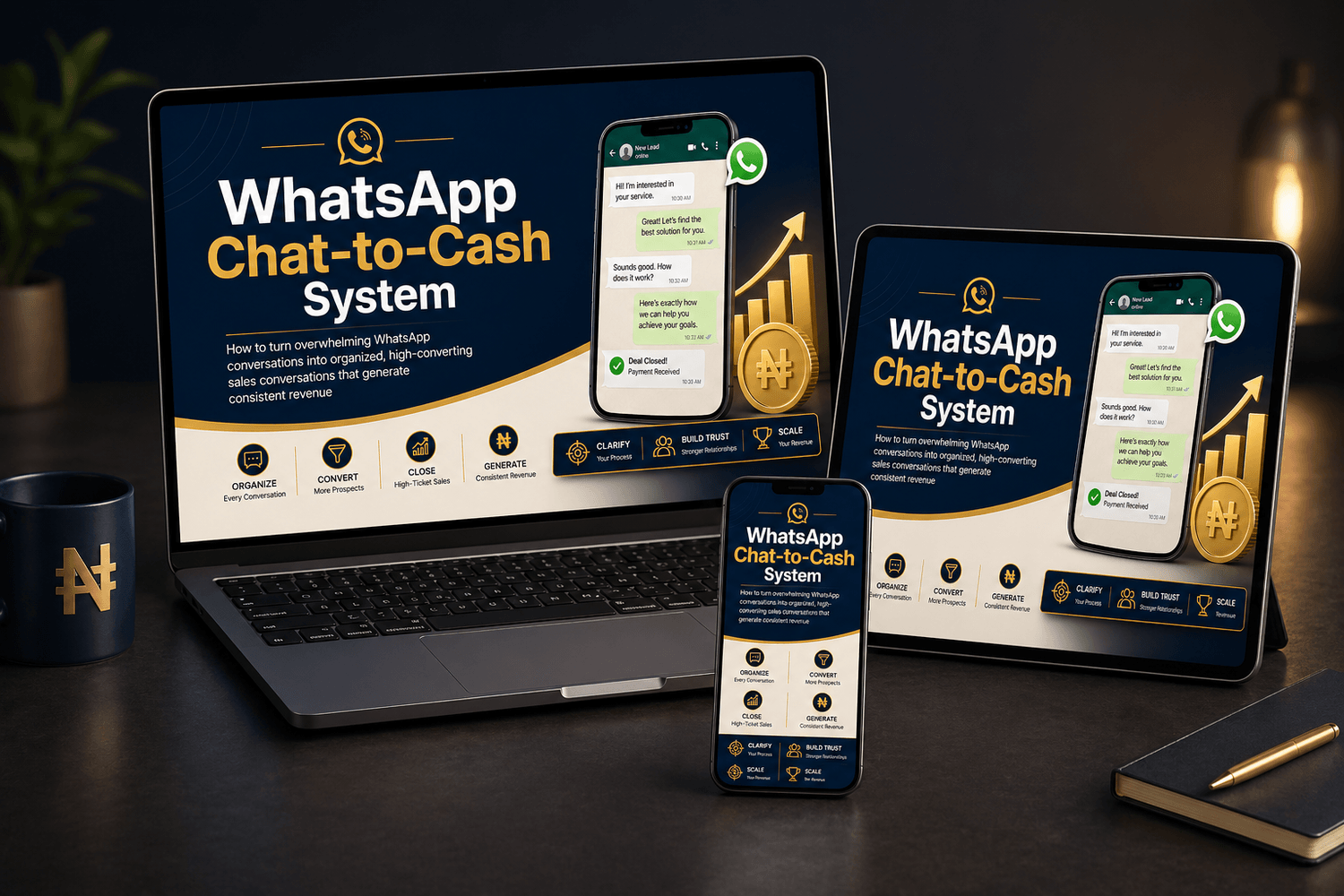
Learn the WhatsApp Chat-to-Cash System for building trust faster, reducing ghosting, and turning more enquiries into actual sales.
From: Anthony
Founder, BizCuite
If many of the enquiries you receive on WhatsApp DON'T end in actual sales...
Maybe they ask for price but don't buy... Or they say, "I will get back to you" but never come back...
Then this is for you.
Whether the enquiries come through:
Social media
Paid ads
Referrals or...
Direct contacts
This will change the game for you.
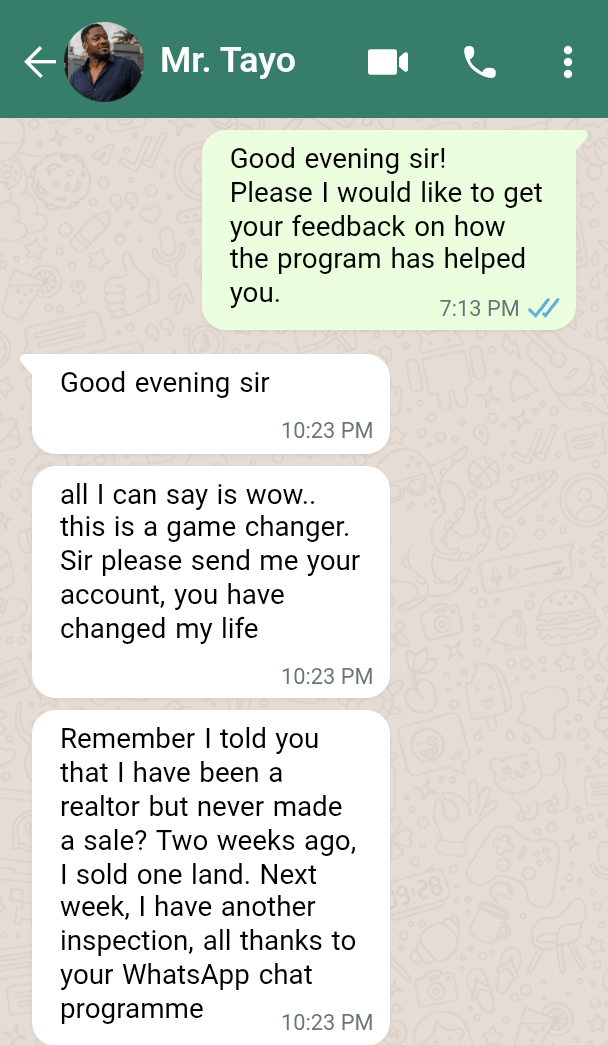
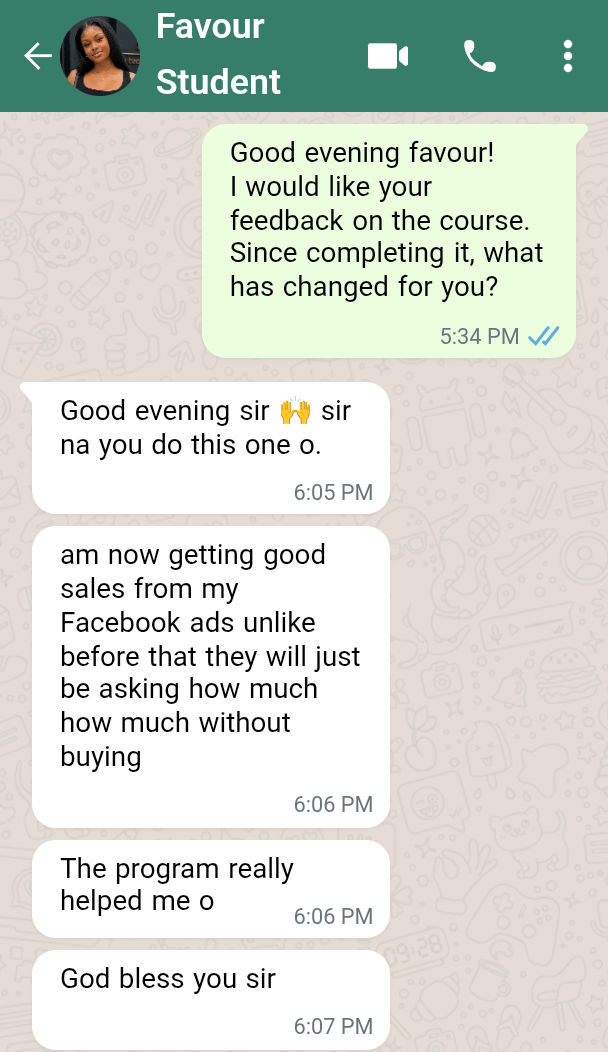
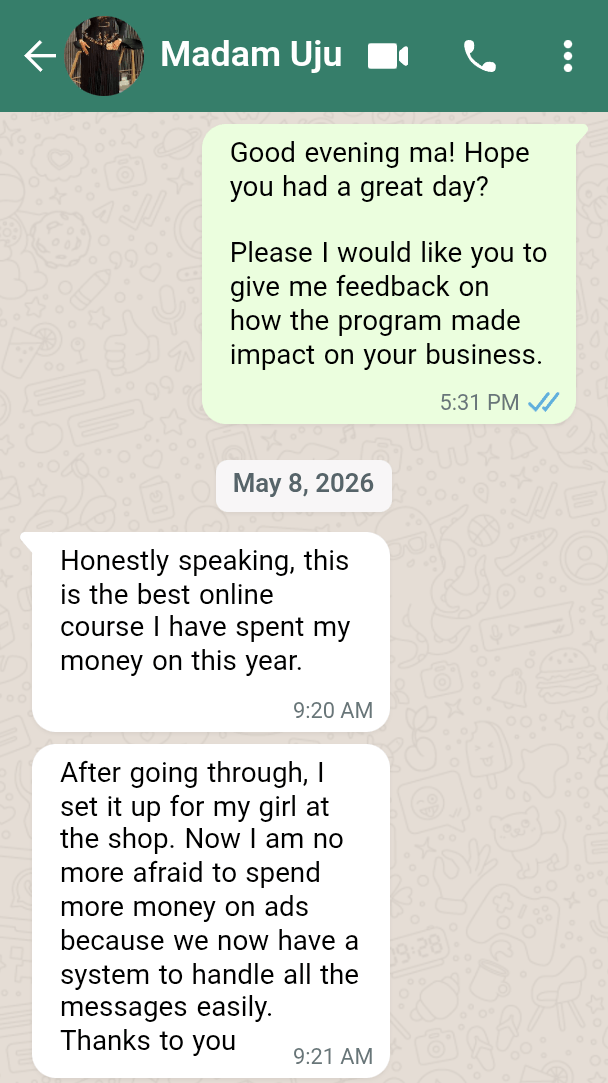
Imagine you DRASTICALLY increase the number of people who ask for price and actually buy...
Or the people that say, "I will get back to you" and actually come back... And buy.
How DRASTIC Will That Increase Your Income?
What if changing the way you chat is all you need to make this your new reality?
How achievable is that?
You may wonder...
How can changing the way I chat increase my income?
Here is how...
Many businesses assume that those who message but don't buy are NOT serious.
Is that true?
Some assume people are ONLY looking for the "cheapest" price.
But the same person pricing you as if they are buying crayfish will go to your competitor and buy it at a higher price.
Why is that?
What if the "deeper" message you communicate through your chats is the main issue?
For example, when they ask "how much?", sometimes they are less interested in your price — and more interested in YOU.
They want to know if they can trust you — or if they should run away.
Thus, your response decides if they stay and buy — or if they stop responding.
Even a discount request is sometimes a test.
Considering all this, don't you see that improving your chats is the guaranteed way to improve response and increase sales?
Because if they can trust you from the very beginning, they will stay and buy.
And that is what the WhatsApp Chat-to-Cash System helps you achieve.
It is a proven WhatsApp chatting method for turning more chats into sales.
It combines proven chatting styles, advanced ChatGPT prompts, and simple automations to increase sales.
It removes the stress of handling too many messages by:
1. Organising your chats using a little-known, AI feature inside WhatsApp.
and...
2. Helping you respond correctly without stressing your brain or typing manually.
That way, you respond to every chat the proper way. As a result, more chats end in actual sales.